
How to Continuously Improve Peak Performance & Sustain It in Any Field (2-Step Method)
If you’ve ever pushed yourself to perform at a high level, you might have experienced this…
At times, progress feels fast and effortless.
At other times, it slows down — or even reverses.
And over time, it starts to feel like:
-something is missing
-or something just isn’t working the way it shouldSo is it actually possible to continuously improve your peak performance and sustain it long-term?
The answer is yes.
But not in the way most people approach it.What is continuous peak performance improvement?
Continuous peak performance improvement refers to the ability to:
-keep improving over time
-sustain high performance without burnout
-adapt across different stages of growth
It is not just about achieving short-term results, but maintaining performance consistently over the long term.Most people try to achieve this by focusing on technical skills within their field, whether that’s in business, sales, marketing, speaking, teaching, coaching, training, sports, physical training, improving body aesthetics, stage performing, or other performance-driven pursuits.
While that is important, it only addresses part of the equation.
What is often missing is the alignment between:
-goals
-internal patterns
-decision-making processes
-and deeper drivers of behavior
Without this alignment, even strong technical skills can lead to inconsistent results.Conscious and Unconscious Influence on Performance
Human behavior is not driven entirely by conscious thinking.
A large portion of our thoughts, patterns, and reactions operate outside of immediate awareness.
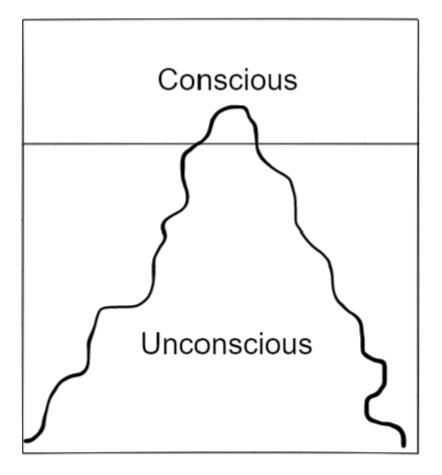
2% conscious, 98% unconscious
Many models describe this as conscious and subconscious processes. Others expand it into multiple layers of mind.A practical way to view this is:
Our awareness exists on a spectrum, from fully conscious to deeply unconscious.
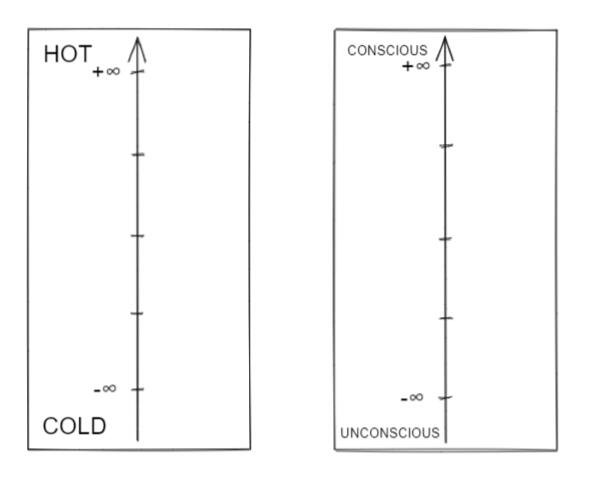
Conscious & unconscious are opposing ends of a continuous spectrum, just like hot & cold.
At any moment, only a small portion of our thoughts are clearly visible to us. The rest continue to influence decisions, behavior, and performance in the background.To access these deeper layers, methods such as:
-reflection
-journaling
-meditation
-coaching
-therapy
-hypnosis
can be used.These approaches help surface patterns that influence performance without us realizing it.This is why improving performance is not just about what you do consciously, but also about understanding and aligning what operates beneath your awareness.The Core Idea: 2 Steps to Sustainable Peak Performance
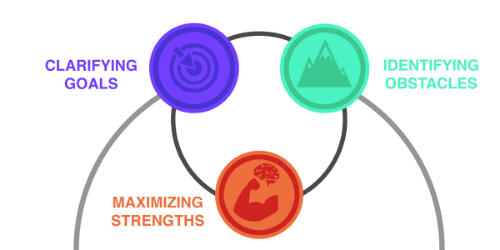
To continuously improve performance and sustain it over time, there are 2 essential steps:1. Set Yourself Up For Continuous Progress
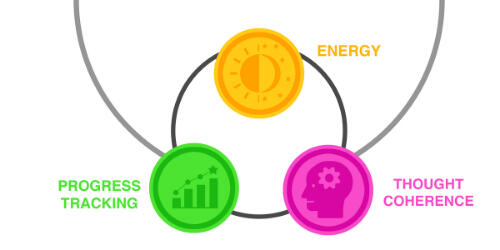
2. Be On Your Path Of Continuous Progress
These form the foundation of the OmniBest Method.Step 1: Set Yourself Up for Continuous Progress
This step ensures your internal system is aligned before you focus on output.
It consists of three key processes:1a. Clarify Your Goals

Lack of clarity in goals often leads to internal misalignment.This happens when surface-level goals do not match deeper motivations.For example:
-A surface goal might be “build a successful business”
-But the deeper goal might be “achieve financial freedom with flexibility and autonomy”
If only the surface goal is pursued, the strategy may unintentionally create:
-excessive workload
-lack of systems
-burnout after success
This is not about there being one correct way to run a business, but about ensuring that your strategy aligns with your deeper intention.Similarly, in physical training:
-A surface goal might be “improve performance in the gym”.
-But a deeper goal might be “develop a body that is mobile, resilient, and sustainable over time”.
If the deeper goal is not clarified, training may become overly focused on:
-fixed, two-dimensional exercises (e.g. bench press, squats, deadlifts)
-while neglecting mobility, movement quality, and structural balance
This can eventually lead to:
-plateaus
-reduced motivation
-or a sense that something is missingWhen deeper goals are clarified, actions become more aligned — and performance becomes more sustainable.Explore in greater detail:
1b. Maximize Your Strengths
Everyone has unique strengths, but not all of them are clearly understood.Some strengths are obvious and consciously applied.Others operate unconsciously and may:
-contribute to success without being recognized
-or even be misattributed to the wrong factorsThis means that many people:
-do not fully understand what actually drives their results
-and may focus on reinforcing the wrong thingsAs a result, it becomes difficult to:
-replicate success consistently
-adapt performance across different situations
-or scale their resultsThis becomes especially important in fields like coaching, teaching, or training, where understanding what truly contributes to progress allows you to transfer that progress more effectively to others.1c. Identify Your Obstacles

Just as strengths exist at both conscious and unconscious levels, so do obstacles.Some obstacles are visible. Others are hidden within habits, assumptions, or behavioral patterns.A common challenge is:
-focusing on the wrong problems
-or overlooking the actual limiting factorsIn some cases, a trait that contributes to success in one context may become an obstacle in another.For example:
-a highly disciplined approach may drive progress in structured environments
-but create rigidity in situations that require adaptabilityWhen obstacles are not clearly identified, effort can be misdirected.By identifying real obstacles, you can:
-remove unnecessary friction
-focus on meaningful improvements
and progress more efficientlyStep 2: Be on Your Path of Continuous Progress
Once alignment is established, the next step is sustaining progress.
This consists of three processes:2a. Track and Review Your Progress
To improve consistently, you need feedback loops.This means defining indicators of progress that align with your actual goals.
These indicators should evolve based on your stage of development.
For example:
In the earlier business example, if the deeper goal is financial freedom with flexibility:
-In the early stages, progress may involve investing more time to build systems, processes, and structure
-In later stages, progress may shift towards reducing dependency on your time through delegation, automation, or simplification
This is not a fixed formula, but an illustration of how progress tracking should align with both your goal and your stage of growth.Similarly, in physical training:
-Early progress may be measured through strength improvements in exercises
-Over time, progress may expand to include:
a. movement quality
b. coordination across different body parts
c. and long-term resilience
Taking this further, movement improvement can be viewed across three levels:
-Improving the ease of movement of individual body parts (e.g. head, shoulders, hips) in isolation
-Improving the quality of integrated movements (e.g. walking, standing up, exercise movements like squats or pull-ups)
-Improving balance in how different muscles contribute during these movementsThe key idea is that progress tracking should evolve, not remain fixed, as your goals and capabilities develop.2b. Energy and Internal Blockages

Internal resistance can slow down progress even when external skills are strong.These blockages may arise from:
-past experiences
-emotional patterns
-learned responses
-or difficulty adapting to certain environmentsThey can influence:
-motivation
-consistency
-decision-makingThese patterns often reinforce other limiting factors discussed earlier, such as:
-misaligned goals
-inefficient movement patterns
-or recurring behavioral tendenciesAt another level, these patterns can also be viewed as forms of energetic blockages where repeated thoughts, emotions, and experiences create reinforcing cycles that affect how you think, feel, and act.To work with these, different approaches can be used.At a more immediate or surface level:
-practices such as energy work (e.g. chi, prana, reiki, qigong)
-or other forms of somatic or awareness-based methods
may help facilitate a smoother flow in these patterns.At a deeper level:
-reflection
-journaling
-meditation
-therapy
-or similar processes
can help uncover and resolve the underlying causes.A general process for working through these patterns involves:
1. uncover
2. acknowledge
3. address
4. reframe
5. releaseThe key is not the specific method used, but the ability to process and integrate these deeper patterns, so they no longer limit your ability to perform consistently.2c. Thought Coherence
Internal conflict can reduce performance efficiency.At times, different parts of ourselves may want different outcomes:
-one part seeks stability
-another seeks growth
-another avoids riskSome of these conflicts are conscious, while others operate beneath awareness.In some cases, internal conflicts may even be projected outward — appearing as conflicts with other people — when they originate internally.When these are not aligned, it creates internal friction, which reduces clarity and consistency in performance.To improve coherence, you can ask:
-Do these goals or perspectives actually need to conflict?
-Can they support each other instead?
-What would alignment between them look like?Greater internal alignment leads to more stable and sustainable performance.Conclusion: Why This Matters
The 2 steps are simple but not easy.To apply this effectively, you need to accept that you do not yet fully understand yourself or others.And as you grow, this doesn’t disappear. It deepens.Each level of progress reveals new layers to align.Staying open in this way not only allows continuous improvement, but also reduces internal pressure, builds humility, and brings greater clarity to both your performance and your interactions.Sustainable peak performance is not just about improving skills, but aligning:
-goals
-internal patterns
-strengths
-obstacles
-and execution systemsWhen this alignment improves, performance becomes more consistent, adaptable, and sustainable across any field:
business, sports, coaching, performance, or creative work.The OmniBest Method
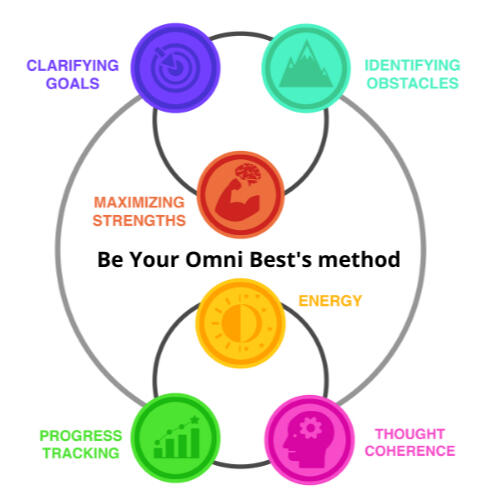
This article gives you an overview of how the 2-step approach works.
If you want to start applying these ideas more practically, you can explore the Self-Surpassing Nuggets Silver Membership Portal below.
Inside, you’ll find actionable insights that help you begin improving your performance more consistently.
Access to the Membership Portal is currently free for the first month.